
Settings
Settings are divided by ownership. Search within the global dialog instead of browsing every section.
User settings
These preferences belong to the signed-in user and follow that user across clients connected to the same server.
| Section | Examples |
|---|---|
| General | Number/width of open panels, mobile connection, personal export |
| Appearance | Language, theme, colors, fonts, syntax/diff display, density, scale, contrast, animation |
| Cards | ID, labels, status, branches, timing, context, and preview density |
| Columns | Count/type/icon/color behavior at responsive sizes |
| Notifications | Sound and event preferences |
| Conversation | Reasoning, tools, timestamps, grouping, spellcheck |
| Shortcuts | Keyboard command bindings |
| Editor & CLI | Preferred editor/terminal and custom executable paths |
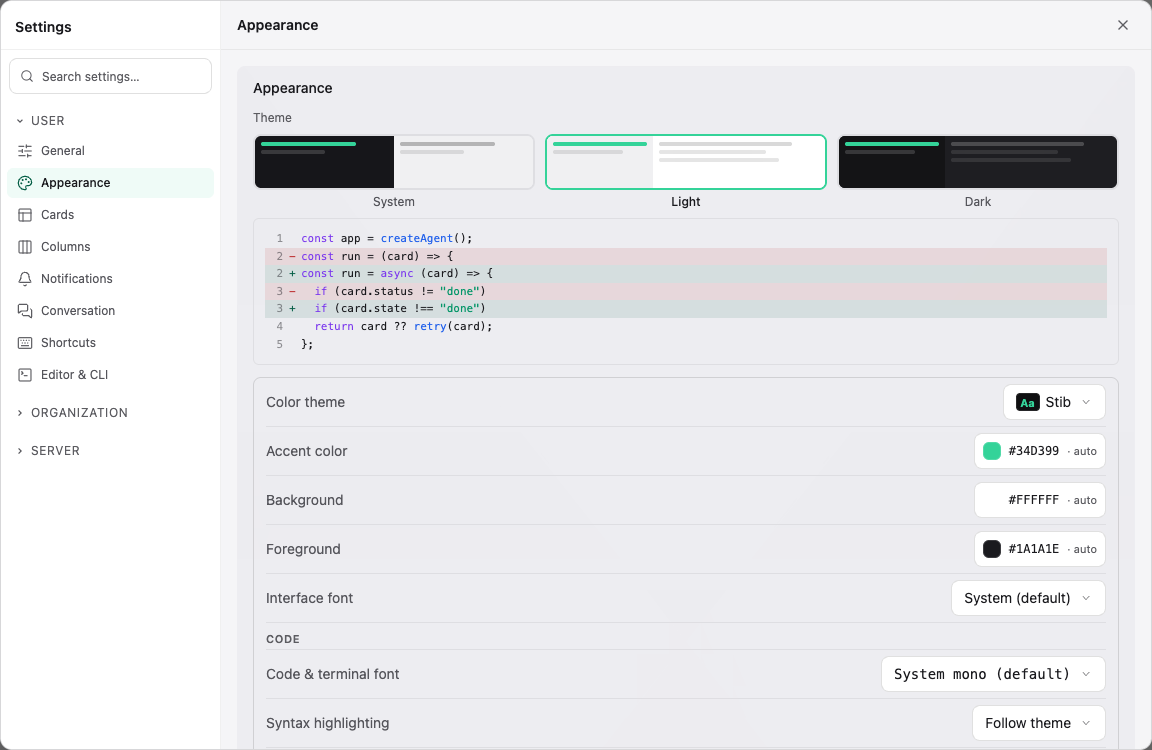
Desktop editor/terminal detection is local to the client machine even though the preference is saved to the user profile.
Organization settings
The organization scope contains General, Members, Labels, Credential, API Keys, Audit, and Audit Webhook. Only authorized organization members can change them. Use organization credentials and labels when several projects should share them; use project scope for exceptions.
Server settings
The server scope contains General, Credentials, Users, Mobile notifications, Authentication, Boards, API Keys, Skills, Integrations, Labels, Backup, Log Export, and Encryption. Most sections require server administration privileges.
See Server Configuration before changing encryption, authentication, backups, private-network integration access, or update settings.
Project settings
Open the project menu, then Project settings. Sections are General, Boards, Scripts, Labels, Sharing, Skills, Credential, API Keys, and History.
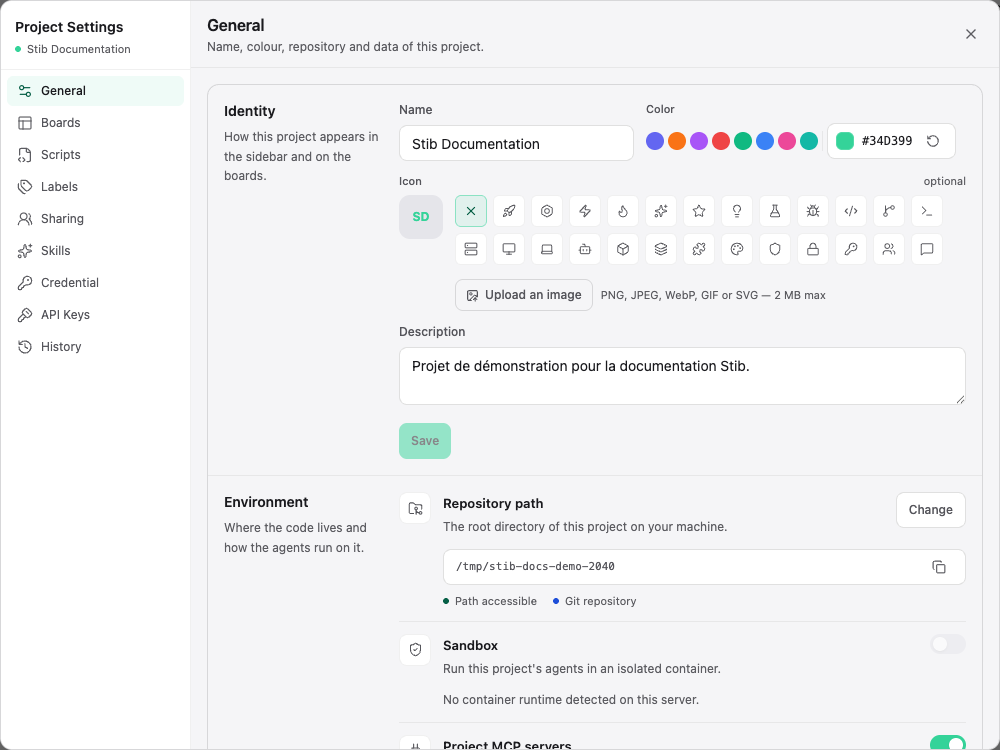
Project changes can affect running agents, repository paths, integration sync, and future cards. The History section helps distinguish a configuration change from an agent-side issue.
Board and column settings
Board settings define workflow defaults, agent/model selection, templates, and optional integration attachment. Column settings define stage behavior across General, Agent, Automations, Webhooks, Sort, and Advanced.
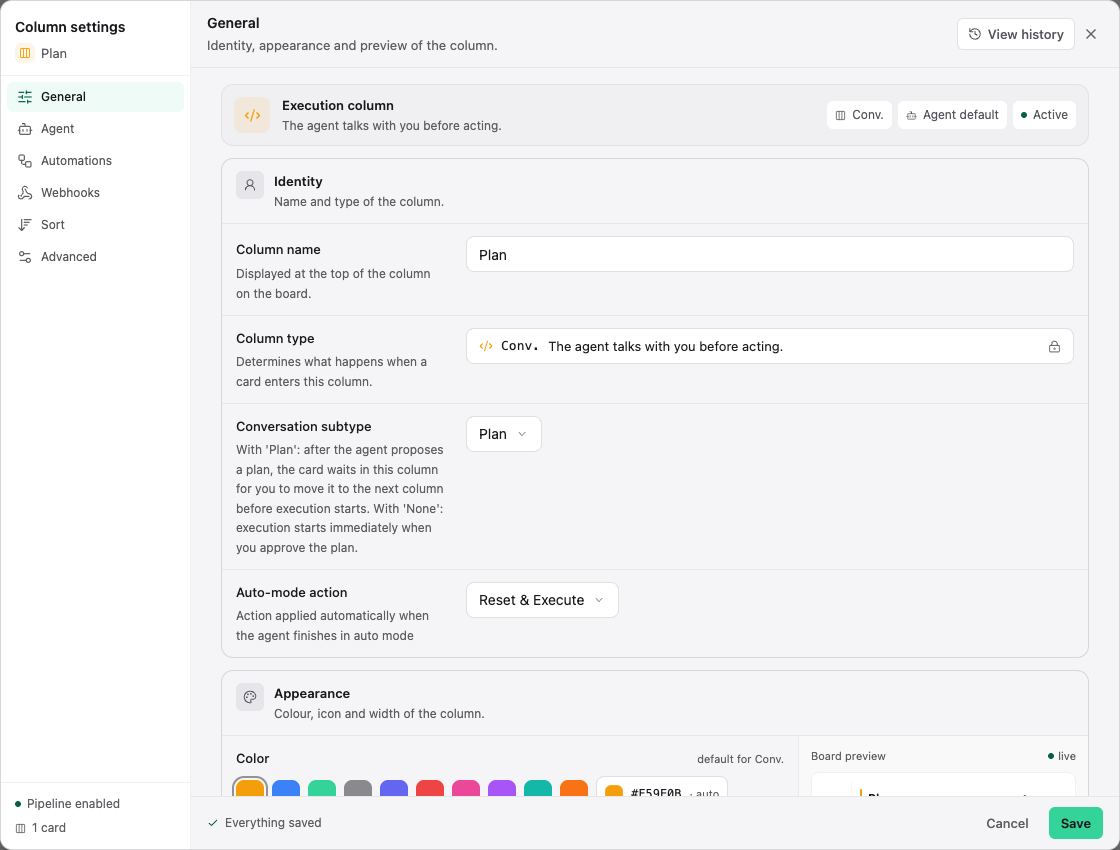
Column type is structural and is not treated like a cosmetic name change. When a workflow needs a different execution type, create or replace the column deliberately and migrate cards after reviewing automation.
Saving and inheritance
Many editors save immediately or report Everything saved; others have an explicit Save button. Do not close a dialog while it reports unsaved changes.
Defaults generally flow from server/organization to project, board, column, and card, but not every setting participates in every level. The interface shows the effective value and source where inheritance matters.
Next: Projects & Organizations and Server Configuration.